Carter Law Group | March 19, 2026 | Personal Injury

A motor vehicle recall happens when a vehicle has a safety defect or fails to meet minimum safety standards. A manufacturer or the federal government may identify a safety defect. Recalls affect millions of cars, trucks, and SUVs each year. Fresno drivers rely on their vehicles daily.
Understanding common types of defects behind recalls can help you stay safe on the road and know your rights if a defect leads to an accident.
How Vehicle Recalls Work
The National Highway Traffic Safety Administration (NHTSA) oversees vehicle safety recalls in the United States. When a manufacturer identifies a safety defect, it is required to notify NHTSA within five business days. The manufacturer must then notify registered vehicle owners by mail within 60 days and provide a free repair.
Vehicle owners can also report potential defects directly to NHTSA. If the agency receives enough similar complaints, it may open its own investigation and order a recall if it finds an unreasonable safety risk.
In 2022, over 30.8 million vehicles in the United States were subject to safety recalls. Despite this, millions of recalled vehicles remain unrepaired each year, leaving drivers and passengers exposed to known hazards.
The Most Common Types of Vehicle Defects
Recalls cover a wide range of safety problems. Some defects are relatively minor, while others can cause serious accidents or fatalities. The most frequently recalled defect categories include:
Airbag Defects
Faulty airbags are among the most dangerous and commonly recalled items. During a collision, airbags can fail to deploy. Without this protection, occupants may sustain severe injuries.
On the other hand, defective airbag inflators can rupture. When this occurs, metal fragments can fly into the cabin. The Takata airbag recall remains the largest in U.S. history, affecting approximately 67 million inflators across dozens of manufacturers.
Brake System Failures
Brake defects include a variety of problems, including issues with:
- Brake lines
- Master cylinders
- Brake pads
- Electronic braking systems
Drivers may be unable to stop or slow down when a brake failure occurs at highway speeds. The result is often rear-end collisions or intersection crashes. These defects are especially dangerous on Fresno’s busy corridors like Highway 99 and Highway 41.
Steering and Suspension Problems
Defective steering components can cause a driver to lose control of their vehicle without warning. Recalls in this category often involve power steering failures, loose tie rods, or defective control arms. Suspension defects can also lead to uneven tire wear and handling problems that increase the risk of rollovers.
Fuel System and Fire Hazards
Fuel leaks can create serious fire risks. Defects can include:
- Cracked fuel lines
- Faulty fuel pumps
- Improperly sealed fuel tanks
Some recalls involve electrical components that overheat and ignite nearby materials. Post-crash fires caused by fuel system defects can turn survivable accidents into fatal ones.
Electrical System Failures
Modern vehicles rely heavily on electronic systems. Defects in wiring, battery management systems, or electronic control modules can cause vehicles to stall unexpectedly, lose lighting, or experience unintended acceleration. These failures are increasingly common in newer vehicles with complex onboard technology.
How To Check if Your Vehicle Has Been Recalled
You can check for open recalls by entering your vehicle identification number (VIN) on NHTSA’s recall lookup tool. The VIN is located on the lower left corner of your windshield or on a label inside your driver’s side door frame. NHTSA recommends checking for recalls at least twice a year.
If your vehicle has an open recall, take it to a local authorized dealership for a free repair. Do not ignore recall notices, even if the vehicle seems to be running fine. Some defects may not produce noticeable symptoms until they cause a failure.
What To Do if a Defective Vehicle Causes an Accident in Fresno
If you are involved in a car accident in Fresno and suspect a vehicle defect played a role, take the following steps:
- Seek medical attention right away, even if injuries seem minor
- File a police report documenting the accident
- Preserve the vehicle and do not authorize repairs until it has been inspected
- Check NHTSA’s database for any open recalls on your vehicle
- Save all medical records, repair estimates, and correspondence with the manufacturer
California law allows injury victims to pursue compensation for economic and non-economic damages from manufacturers who sell vehicles with dangerous defects. If a recalled part caused or contributed to a serious crash on a Fresno highway, the manufacturer and other parties in the supply chain may be held liable.
Contact Carter Law Group To Schedule a Free Consultation With a Fresno Personal Injury Lawyer
Vehicle defects are one of the few accident causes in Fresno, CA, that are entirely outside a driver’s control. Staying informed about recalls, acting on recall notices promptly, and reporting potential defects to NHTSA are the best ways to reduce your risk.
Keeping up with recall notices is a simple step that can prevent a serious accident. If you’ve been injured, reach out to Carter Law Group today. We offer a free consultation with a Fresno personal injury attorney.
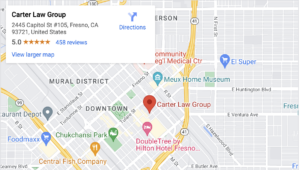
Visit Our Personal Injury Law Firm in Fresno, CA
Carter Law Group
2445 Capitol St #105, Fresno, CA 93721, United States
(559) 485-1212